News
2025
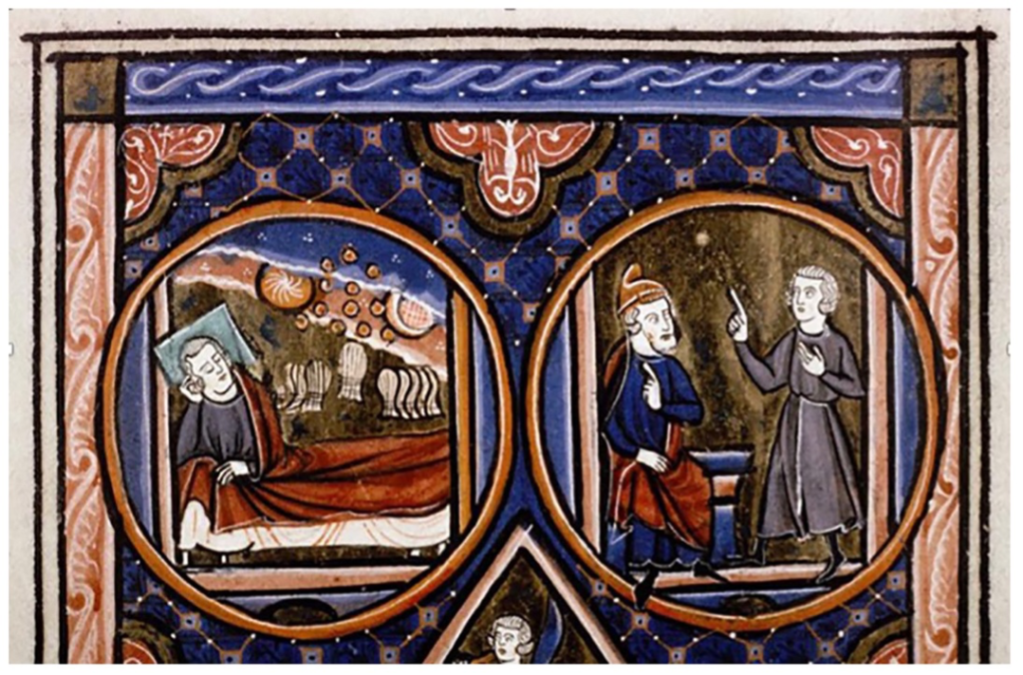
Medieval Media Studies: Dreams and the Digital Imaginary
On May 14th at Baruch College, in conjunction with Mishkin Gallery’s current exhibition Visible Communication, Professor Griffiths presented a lecture on the rich visual culture of the medieval period and dreaming as a kind of visual thought experiment, opening up intellectual thought lines across distinct eras to remind us that our contemporary digital landscape (and cinema before that) are not divorced from earlier ways of seeing and believing.
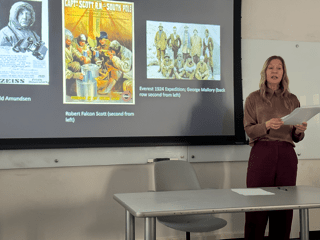
The Dialectics of Adventure: Expedition Film and Counter-History at the Explorers Club
Professor Griffiths gave a talk on her latest book, Nomadic Cinema: A Cultural Geography of the Expedition Film, at the University at Albany on April 24th. The lecture was about The Explorers Club in New York City, a vibrant home for all things related to exploration that is still active in sponsoring and promoting scientific research, drawing upon archival research Professor Griffiths conducted at the Explorers Club that was funded by a 2018 Guggenheim Fellowship
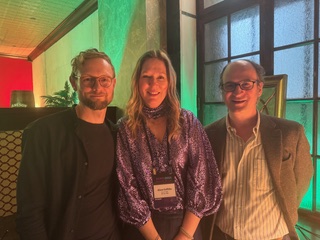
CUP Book Launch Party
On April 4 at the Emerald Bar and Grill, during the Society of Cinema and Media Studies Conference, Professor Griffiths, along with Prof Rob King of Columbia University, and Brian Jacobson of the California Institute of Technology, celebrated the publication of their three new books from Columbia University Press’ Film and Culture series: Nomadic Cinema: A Cultural Geography of the Expedition Film, Man of Taste, the Erotic Cinema of Radley Metzger, and The Cinema of Extractions: Film Materials and Their Forms.
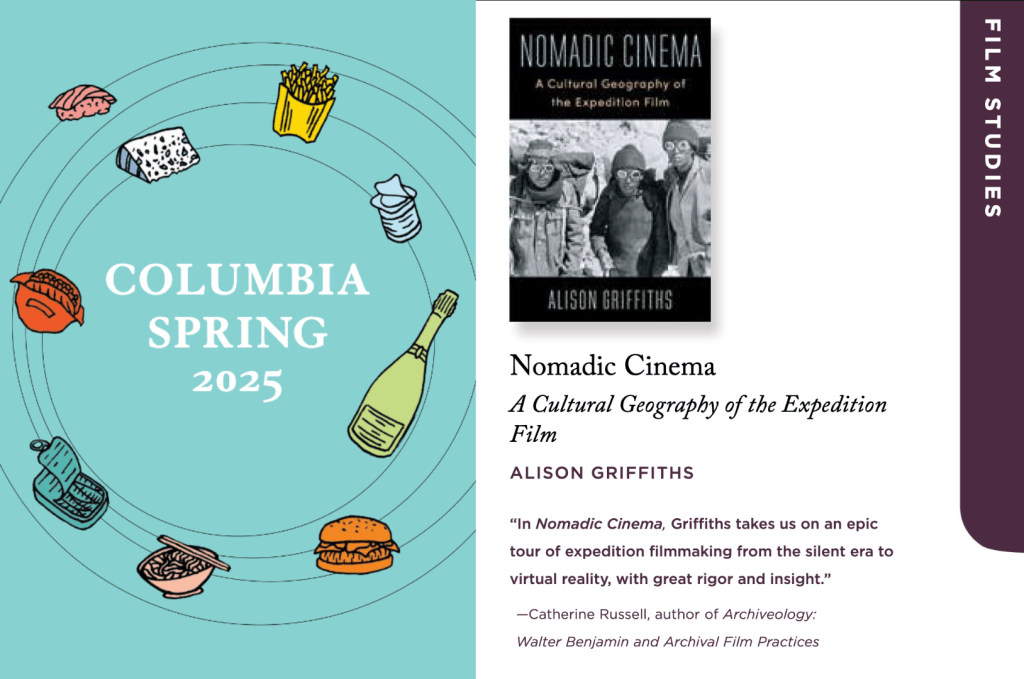
Nomadic Cinema featured in 2025 Columbia University Press Spring Catalogue
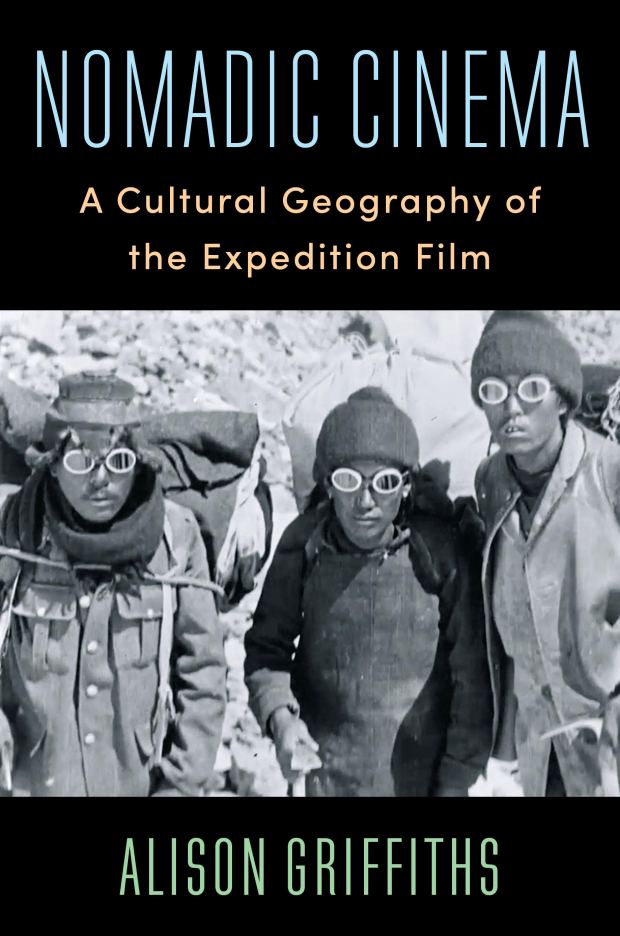
Release of Nomadic Cinema
Professor Griffith’s fourth book with Columbia University Press was released in April 2025. Nomadic Cinema is a groundbreaking history of expedition films from the 20th century, analyzing them as visual records of colonialism that also offer new possibilities for recognizing Indigenous histories. It considers the individuals and institutions—including the American Museum of Natural History — responsible for creating the films, the spectators who sought them out, and the Indigenous intermediaries whose roles white explorers minimized.
2024
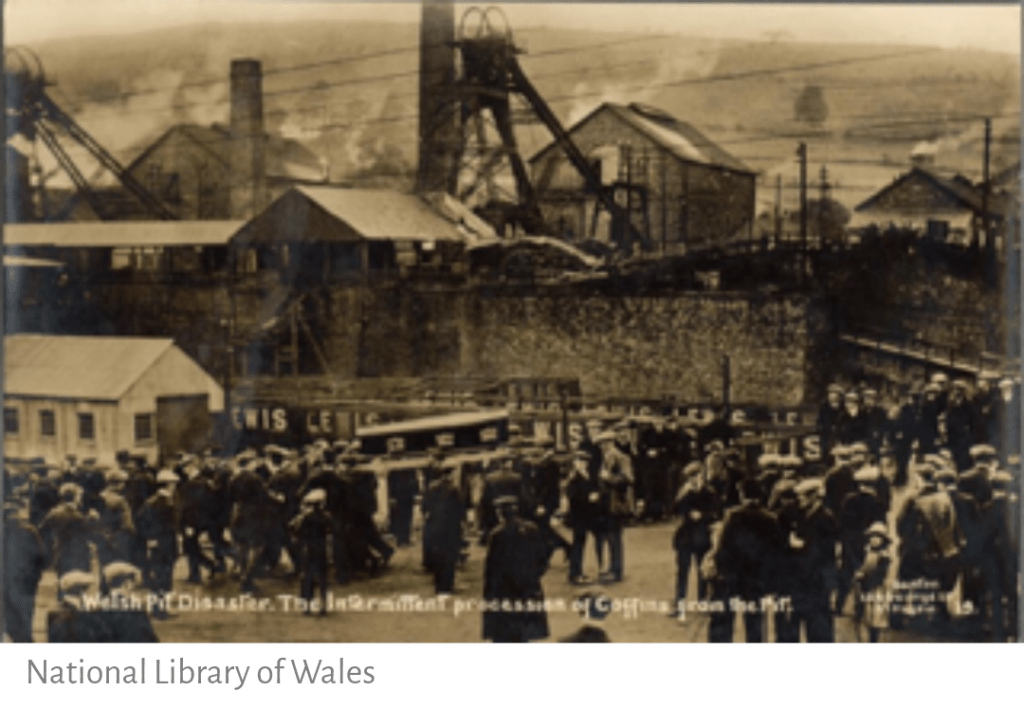
Grant received for new research project on Welsh coal mining disasters
Alison Griffith’s new research project explores film and photographic coverage of mining disasters in South Wales between 1877-1926, events that occurred with shocking regularity due to the inherent dangers of fossil fuel extraction. Making sense of coal mining disasters as seen unseen events and indices of culturally specific communities – their regularity contributed to the rise of the postcard industry in the UK, disaster tourism, and readership of the Illustrated London News – requires an epistemology that reads loss in both micro and macro terms. Drawing upon archival research conducted in South Wales in summer 2024 at the Glamorgan Archive and multiple heritage sites, the project examines the visual culture of mining disasters, framing the material in the context of mining’s re-imaging within the heritage industry.
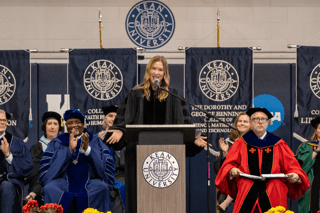
Convocation address and lecture at Kean University
In May, Griffiths delivered the Honors Convocation address at Kean University in New Jersey. Griffiths talked about her long fascination with silent film and visual culture and how to harness the power of images for good rather than as weaponized tools of shame or hate. Drawing upon her own academic journey, Griffiths discussed the idea of amateur film as cultural memory and news ways of approaching and re-imagining the archive from an Indigenous perspective

Indigenous Sovereignty and Lifeways: Cartographic Imaginaries and Immersive Video at the Venice Biennale.
Griffiths delivered a lecture which explored how Sámi artists, Indigenous peoples from the Sápmi region of northern Scandinavia and Russia, utilize extended reality (XR) video to exploit the reconstructive, place-making potency of 360-degree large-format immersive video. Focusing on an immersive video shown at the Sámi Pavilion at 59th Biennale de Venezia in 2022, where in a historic first, the Nordic Pavilion became an exhibition space dedicated to Sámi artworks, Griffiths placed it in conversation with much earlier Renaissance cartographic practices that represent the Sámi in visually stunning large-format maps, arguing that their presence in the landscape across centuries of visual representation might be considered a form of suppressed geography of cultural and territorial rights affirming the Sámi’s lifeways and sense of self-determination.
2023
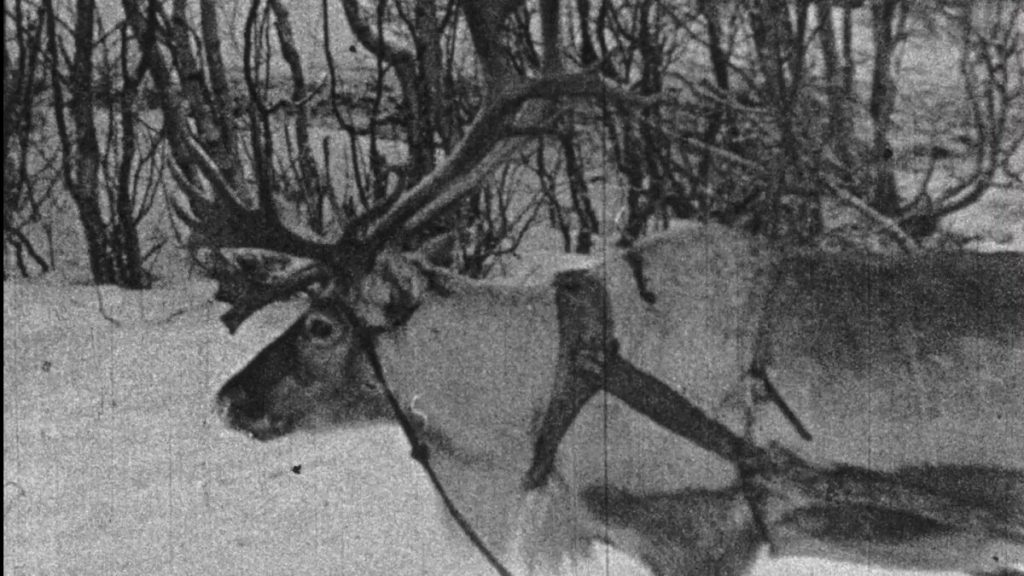
Lecture on the cultural history of Sámi peoples
Alison Griffiths takes us on a journey through the film archive to explore the vibrant cultural history and resilience of Sámi peoples in some of the earliest films made in the Sápmi region. How do archival films inscribe the landscape, cultural heritage, and memory of Sámi peoples whose ancestral roots extend deep into recorded time? And how can contemporary works made by Sámi artists reimagine this archival history by incorporating photographs and films that evoke themes of belonging and connectedness? Finally, what responsibilities do archives have as caretakers of Indigenous audiovisual heritage, and what best practices are there for repatriating films to their homelands?
2022
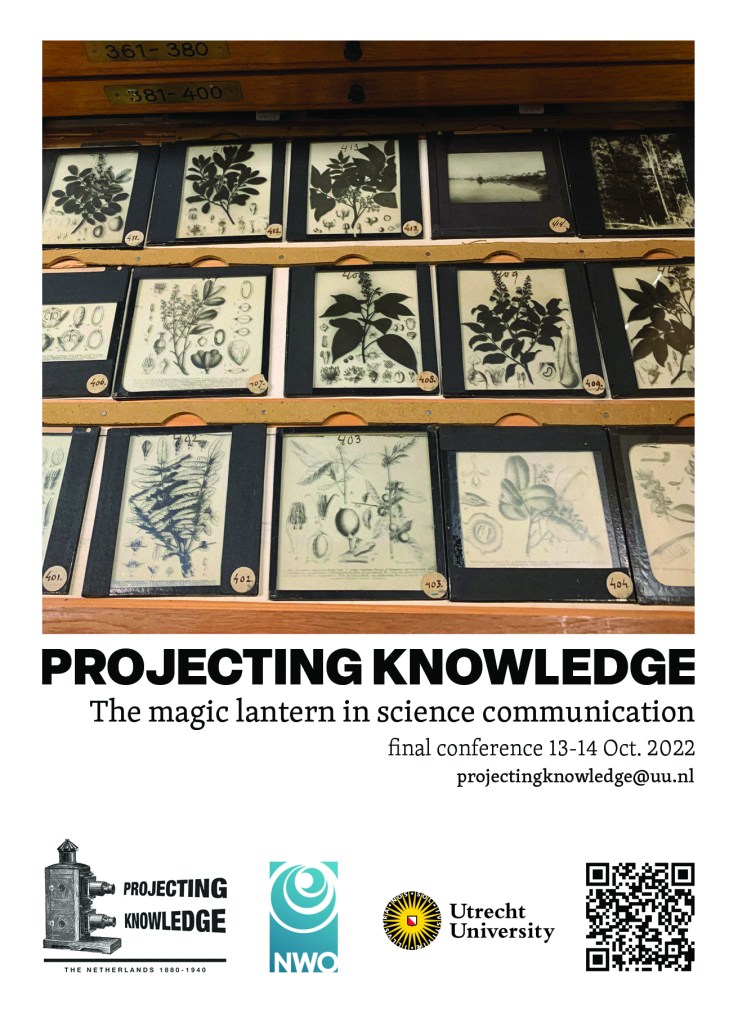
Final Conference Projecting Knowledge: The Magic Lantern in Science Communication
“Griffiths gave a lecture at Utrecht University in October 2022 that explored the use of lantern slides as evidentiary media. She explored the concept of wonder (and its close cousin curiositas) as a way of grappling with the lantern slide’s dialectical indebtedness to veritas (truth) and imaginari (the imagination), as well as the idea of contra-vignetting, a literal and metaphorical shifting away from the center of an image as the locus of meaning. Griffiths grounded these ideas in a case study examination of the use of lantern slides at the Explorers Club in New York City, a vibrant “maker space” where the latest technology and images of adventure were projected onto the screen.”

Design at the Border: Liminality in Medieval and Postmodern Contexts
Griffiths presented her work on cartography, immersion, and virtual reality at the International Medieval Congress in Leeds, UK in July, part of a broader research project on a media imaginary in medieval visual works. An earlier version of this research appears in the “In Focus” section of the most recent issue of the Journal of Cinema and Media Studies entitled “Humanitarian Immersion” vol. 61, no. 3 (Spring 2022), available here. Griffiths was on a panel entitled “Design at the Border: Liminality in Medieval and Postmodern Contexts,” co-moderated by Laura Hollengreen, University of Arizona and Rebecca Rouse, Institutionen för Informationsteknologi Högskolan i Skövde, Denmark.

Fulbright Distinguished Arctic Scholar Award to Norway
As the Fulbright Arctic Chair, Dr. Griffiths will be based at the National Library of Norway in Oslo with a secondary affiliation at the UiT, The Arctic University in Tromsø, where she will examine amateur films of Indigenous Sámi people made between 1907-1960 within a broader historical context of visual representations of the Arctic, including cartographic materials in the world famous Ginsberg Map Collection at the National Library.
2021
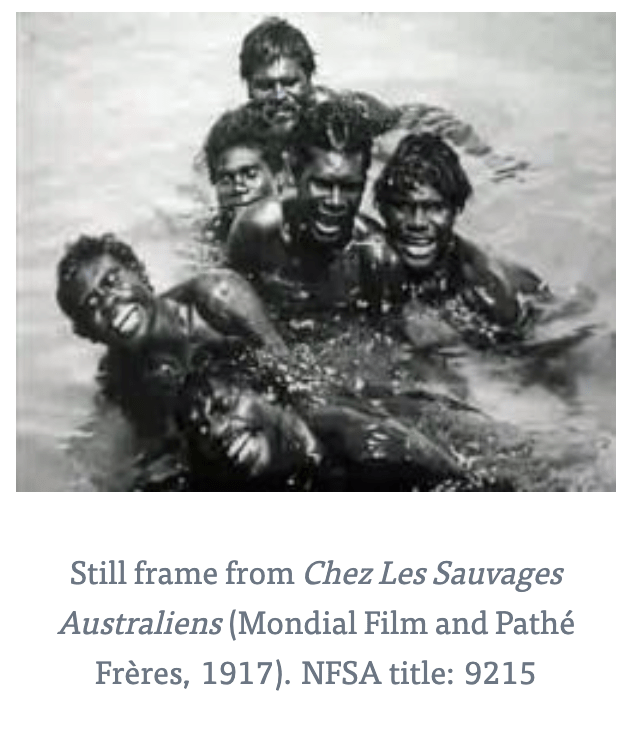
CUNY Research Foundation Enhanced Award Grant
Granted for book project in progress: New Worlds From the Margins: Travel, Identity, and Vernacular Media. Archival research on amateur film featuring Indigenous Australians at the National Film and Sound Archive, Canberra, Australia.
2020
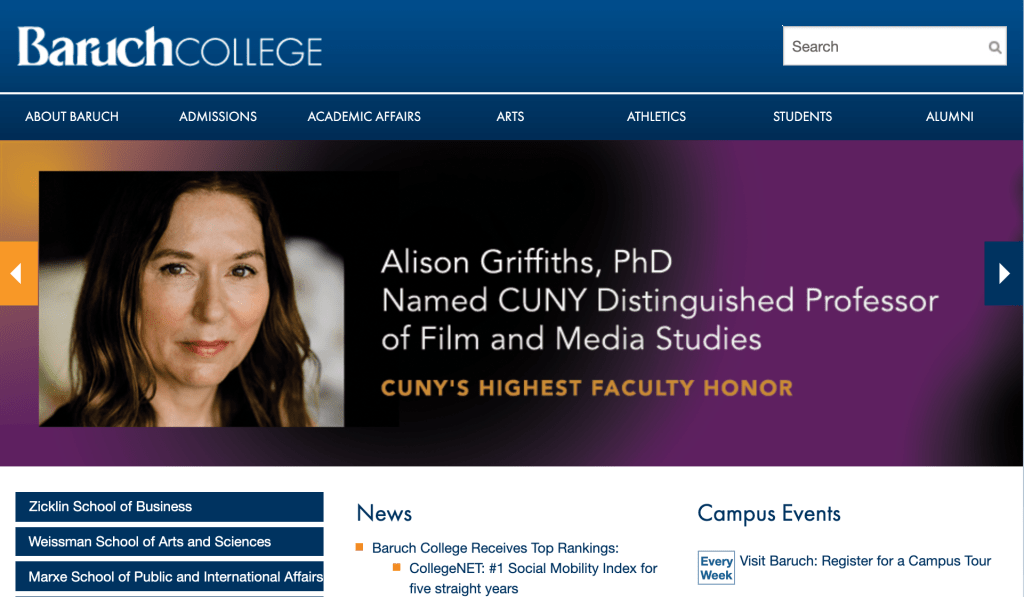
CUNY Distinguished Professor
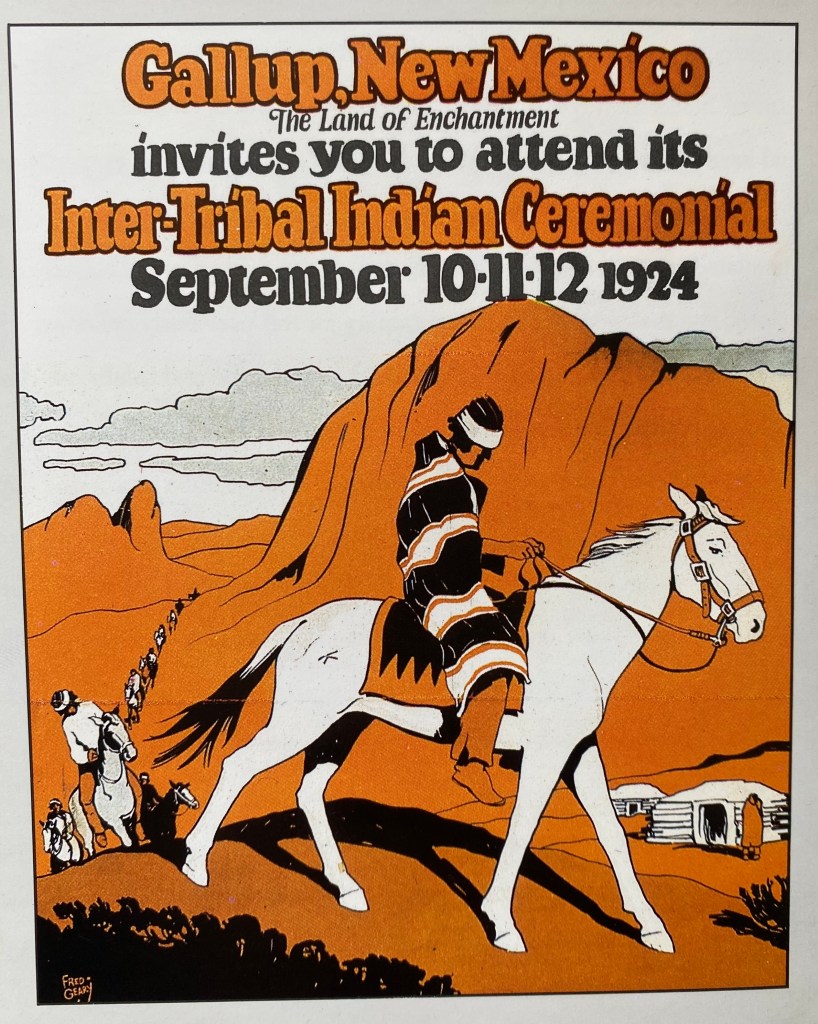
Research Grant, The Waterhouse Family Institute for the Study of Communication and Society, Villanova University
Awarded for “Collective Memory and Visual Communication: The Archival Legacy of the Inter-Tribal Indian Ceremonial, Gallup, New Mexico.”
WFI Awards Page
2019

Mayer Fellowship, Huntington Library, San Marino, California
Awarded for “Nomadic Cinema: A Cultural Geography of the Expedition Film.”
Huntington fellowship link
2018
John Simon Guggenheim Fellowship
Awarded for “Nomadic Cinema: A Cultural Geography of the Expedition Film.”
Guggenheim website

American Council of Learned Societies (ACLS) Project Development Grant
Awarded for “Nomadic Cinema: A Cultural Geography of the Expedition Film.”
ACLS grantees
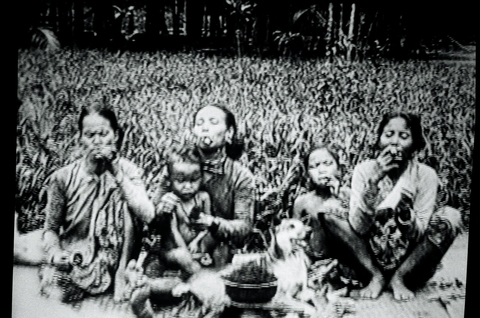
New Book Project: Nomadic Cinema: A Cultural Geography of the Expedition Film
Nomadic Cinema is the first monograph to examine the expedition film, focusing on films shot in Borneo, Central Asia, Tibet, Polynesia, and the American Southwest during the so-called “great age” of exploration. Grounded in archival research and drawing upon the fields of cultural geography, postcolonialism, and environmental media studies, Nomadic Cinema constructs an intellectual history of expedition filmmaking that views it as inexorably shaped, haunted if you will, by the twin specters of colonialism and adventure. The book also contextualizes expedition filmmaking within the longue durée of pre-modern travel writing and medieval theories of the world as spatialized knowledge, as well as new technologies of exploration such as VR and augmented reality.
2016
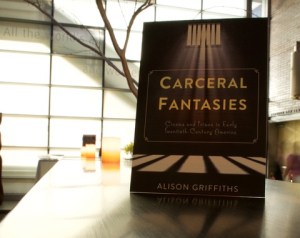
Carcerial Fantasies Book Signing
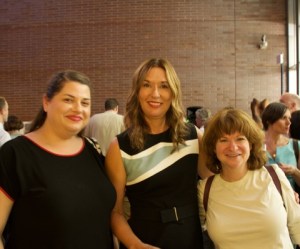
On September 8th, 2016 at Baruch College’s Performing Arts Center, colleagues, friends and family were greeted by author and professor Alison Griffiths at the book signing for her latest work, Carceral Fantasies: Cinema and Prison in Early Twentieth-Century America (Columbia University Press, 2016)
Carceral Fantasies explores the little-known history of how cinema found a home in the U.S. penitentiary system and how the prison emerged as a setting and narrative trope in modern cinema. Opening remarks were made by Dr. Aldemaro Romero Jr., the newly appointed Dean of the Weissman School of Arts and Sciences, and David Birdsell, Dean of the Baruch College School of Public and International Affairs. Baruch College President Mitchel Wallerstein was in attendance as well as many colleagues, family, and friends of the author.
 Alison Griffiths